
The Green Path of Agricultural and Rural Tourism
- Nov 11, 2025
- 5 min read

According to the Ministry of Agriculture and Environment, by 2025, Vietnam will have more than 600 active agricultural and rural tourism models — an increase of 235 compared to 2022. Many of these models combine OCOP product consumption with community-based tourism.
Each year, about 35,000 tourists visit the flower and ornamental plant craft village of Hong Van Commune, Hanoi. Agricultural tourism has generated approximately 10 billion VND in annual revenue for the locality. Recently, the commune authorities have planned and landscaped the area, skillfully integrating the ornamental plant trade with cultural events such as the Spring Flower Festival, Love Festival, and Chu Dong Tu – Tien Dung Festival to attract more visitors.
Hanoi currently has 1,350 craft villages and villages with traditional trades, of which 337 have been officially recognized by the city. From Bat Trang Pottery Village and Van Phuc Silk Village to Quang Phu Cau Incense Village, Chuong Conical Hat Village, Quat Dong Embroidery Village, Son Dong Wood Carving Village, and Phu Vinh Bamboo and Rattan Village — these destinations offer unique cultural and craft experiences. The Quang Phu Cau incense stick craft village in Ung Thien Commune, though newly established as a tourist site, has already welcomed tens of thousands of visitors, 60–70% of whom are foreign tourists.
Similarly, Thai Nguyen Province, home to the famous Tan Cuong tea region and the picturesque La Bang Waterfall, has been naturally endowed with ideal conditions for developing eco-tourism and rural tourism. Over the past five years, numerous eco-tourism models have emerged, with the Phuong Hoang Cave – Mo Ga Stream Tourist Area (Vo Nhai Commune) standing out as a notable example.
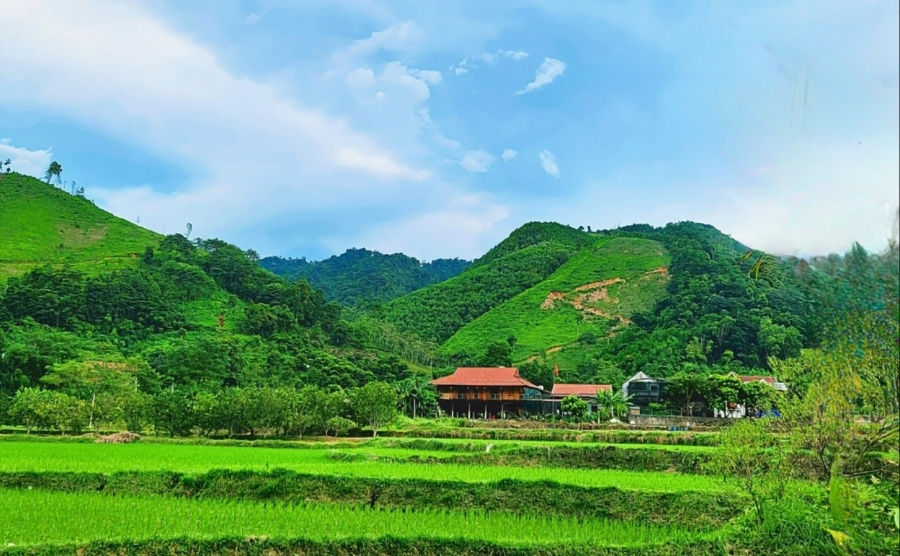
Local households have been supported to invest in homestays, providing accommodation for tourists who come to explore the landscape and experience community life. Mr. Hoang Thanh Nha, owner of Moc Homestay in Mo Ga Hamlet, shared: “Urban visitors come here not only to relax but also to slow down, pick vegetables by hand, light a fire, enjoy tea, and immerse themselves in nature.”
Meanwhile, in La Bang Commune, tourists can stroll through the poetic natural scenery while experiencing tea picking and processing with local residents. Ms. Nguyen Thi Hai, Director of La Bang Tea Cooperative, said: “Many visitors come here simply to breathe in the aroma of freshly harvested tea and enjoy a hot cup of tea on the hillside. These simple yet authentic experiences are what make La Bang’s agricultural tourism truly unique.”
As of the third quarter of 2025, Thai Nguyen had welcomed over 1.8 million visitors, including 1.3 million domestic tourists, with total revenue exceeding 1.88 trillion VND. Promotional programs such as the “Thai Nguyen Culinary Tour 2025” and famtrip activities have helped spread the image of this culturally rich midland region to both domestic and international audiences.
In Lam Dong, the OCOP Program and the Rural Tourism Development Program have created a dual impact. Instead of focusing solely on traditional agriculture, local residents have embraced agricultural tourism—shifting from single-value agricultural production to a multi-value rural economy that combines agriculture, culture, ecology, and services.
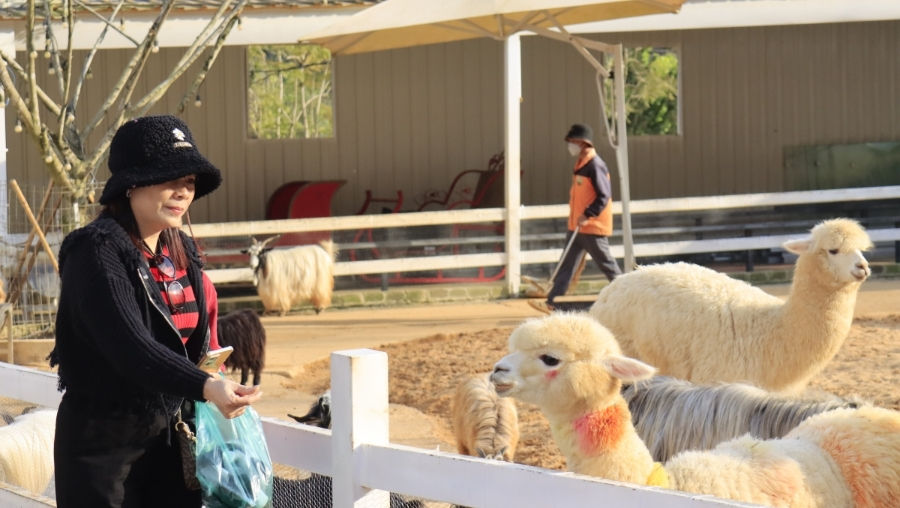
Mr. Phan Thanh Nhan, owner of Avocado Farm in Quang Lap Commune, shared:“The OCOP program helps create signature local products — a unique factor that enhances the tourism experience. Meanwhile, the Rural Tourism Development Program provides opportunities for local agricultural products to be ‘exported on the spot.’”
It is evident that developing community-based tourism in conjunction with new rural development has become an effective direction, awakening the potential of the countryside. According to the Ministry of Agriculture and Environment, there are now more than 600 active agricultural and rural tourism models nationwide.
Among these, nearly 400 rural tourism sites have been officially recognized under the Tourism Law, with over 200 OCOP products rated three stars or higher. Remarkably, two products have achieved the five-star OCOP standard, reflecting strong progress in both quality and scale.
However, the program still faces certain challenges. In some areas, tourism planning remains inconsistent; products are still monotonous, small-scale, and spontaneous. The workforce lacks professional training, while policies related to land, infrastructure, and credit are not yet attractive enough to encourage investment in this field.
Entering the new phase 2026–2030, the Ministry of Agriculture and Environment aims to focus on improving quality rather than merely increasing the number of models, ensuring sustainable and inclusive growth for Vietnam’s green rural tourism sector.

At the National Forum on “Rural Tourism Associated with Ecological Civilization and the Creation of Green Living Environments” held on November 8, Assoc. Prof. Dr. Nguyen Thi Thu Trang from the University of Social Sciences and Humanities, Ho Chi Minh City, stated that the concept of “ecological civilization” is still quite new in Vietnam, although many countries — such as China — have been implementing it for a long time.
In Vietnam, people often talk about net-zero emissions, green products, and green development, but the idea of ecological civilization has not yet been deeply discussed or integrated into specific policies related to tourism or the rural economy. Therefore, according to Assoc. Prof. Dr. Ngo Thu Trang, to develop agricultural and rural tourism in association with ecological civilization and a green living environment, attention should be focused on nine key areas.
These include: developing a multi-value agricultural economy; improving OCOP criteria for agricultural and rural tourism; building green thinking and standards; and preserving local architecture and cultural identity. In addition, it is essential to promote community creativity, attract young human resources, position tourism as an ambassador for agricultural products, strengthen the application of science, technology, and digital transformation, and foster regional linkages and public-private partnerships (PPP).
Contributing to the discussion, Assoc. Prof. Dr. Pham Trung Luong, former Deputy Director of the Vietnam Institute for Tourism Development Research, emphasized the need for mechanisms that encourage sustainable agricultural and rural tourism, in which local communities play the central role.

He emphasized that ecological civilization means developing the economy, society, and environment in harmonious balance, with respect for nature and preservation of local values. He recommended that policies be introduced soon to encourage and integrate tourism into new rural planning, establish criteria for products and services, provide training for local residents, and control non-ecological activities—so that tourism truly becomes a channel for nurturing a green lifestyle starting from the countryside.
At the same time, it is essential to strengthen destination management capacity, develop rural infrastructure that is resilient to climate change, apply smart technologies, and train a high-quality workforce. These efforts will form a crucial foundation for Vietnam’s agricultural and rural tourism to develop sustainably, spread green living values, and enhance the image of a friendly, culturally rich Vietnam on the global tourism map.


Comments